
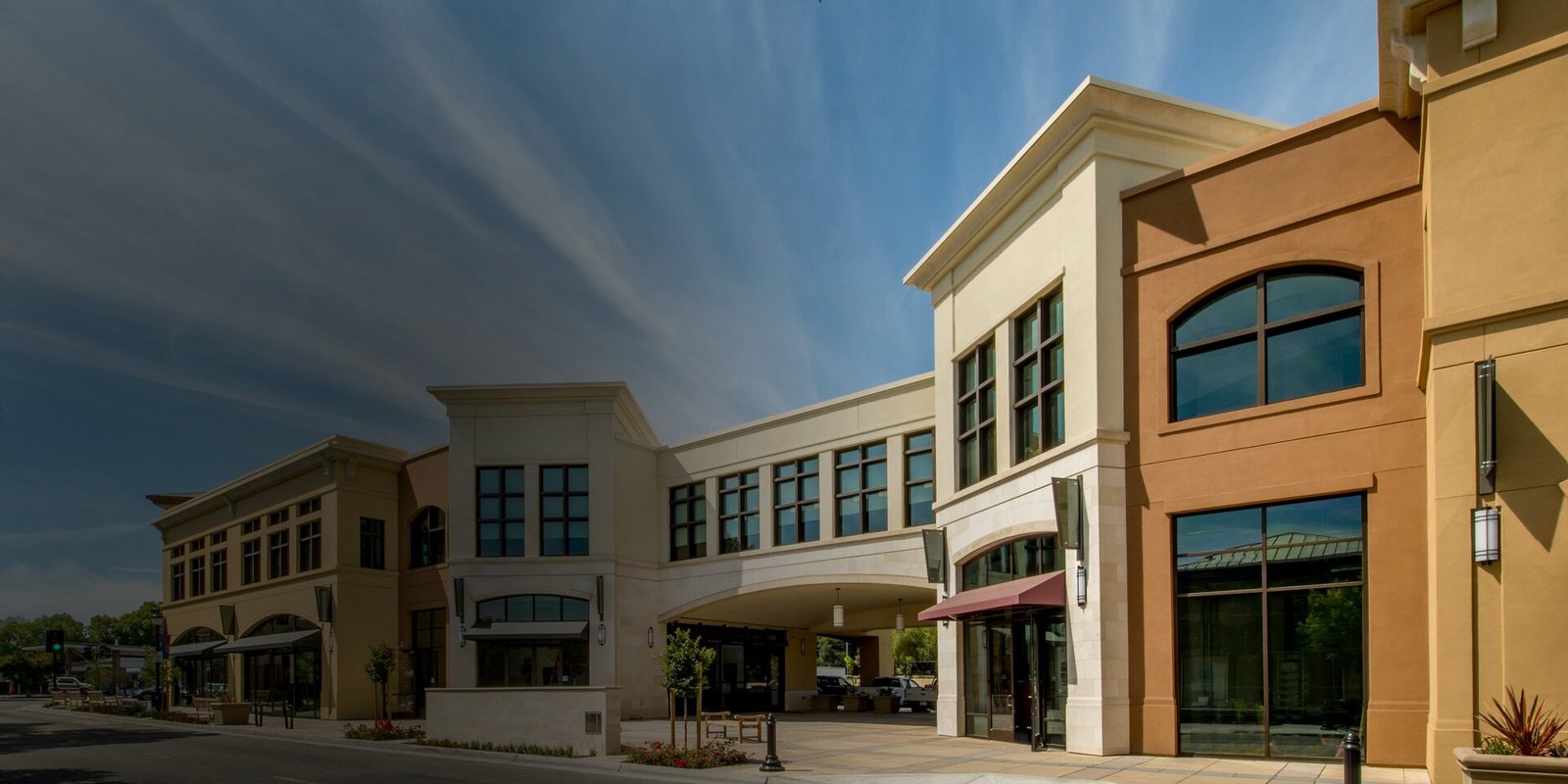

Fire Alarm Installation Services for High-Rise & Multi-Story Commercial in Sandy Springs
Sandy Springs holds one of the few true high-rise clusters outside the City of Atlanta footprint, anchored by the Concourse Corporate Center towers (the King and Queen buildings) at the Glenridge interchange and the broader Perimeter-area office stock. JB Technologies engineers fire alarm and voice-evacuation systems for these buildings under Georgia's adopted NFPA 72 (2022 Edition) and the 2018 International Fire Code high-rise provisions. Commercial submittals route through Sandy Springs Fire & Rescue's Community Development office. Phased addressable conversion is common on the 1990s-era Concourse towers as tenant build-outs trigger partial alarm reprogramming.
Local context, Sandy Springs, GA
Sandy Springs Fire & Rescue runs its own plan review out of Community Development since the city incorporated in 2005, pulling high-rise submittals against the 2018 International Fire Code Chapter 9 alongside Georgia's adopted NFPA 72 (2022 Edition). The Concourse Corporate Center towers (the King and Queen buildings, both above 600 feet) dominate the inventory, along with the Glenridge Highlands office stock. Most were built in the late 1980s through 1990s, so partial alarm reprogramming during tenant fit-outs is constant. NFPA 72 Chapter 18 voice intelligibility (STI 0.45) and NFPA 92 stair-pressurization interfaces are the load-bearing design constraints.
Why Choose JB Technologies for Fire Alarm in Sandy Springs?
- Licensed Georgia Fire Alarm Contractor, NICET-certified technicians
- Fire-Lite (Honeywell) and Kidde Commercial authorized installer
- NFPA 72 (2022 Edition, GA-adopted) design, install, test, and ITM
- Local AHJ submittals: plan review, rough-in, pre-test, acceptance
- As-built drawings, NFPA 72 Record of Completion, battery and voltage-drop calcs
What is a commercial fire alarm system?
A commercial fire alarm system is an engineered detection-and-notification network built to NFPA 72, National Fire Alarm and Signaling Code. Georgia has adopted the 2022 Edition through Rule 120-3-3-.04 of the Insurance & Safety Fire Commissioner. A protected-premises system (NFPA 72 ch 23) ties together initiating devices (smoke, heat, manual pull stations, sprinkler waterflow), notification appliances (horn-strobes, speakers, mass-notification displays), survivable circuit pathways, secondary power supplies, and a fire alarm control panel that supervises the entire loop. Whether the building also needs voice evacuation (NFPA 72 ch 24), two-way communication, or an emergency communications system overlay depends on occupancy classification under NFPA 101 (2024 GA-adopted Life Safety Code) and the IFC 2018 with Georgia amendments.
What drives the scope of a system in Sandy Springs
Fire alarm scope in Georgia commercial construction is code-driven, not preference-driven. The triggers we see most:
- Occupancy classification, healthcare (I-2), assembly (A-1 to A-5), educational (E), residential (R-1 hotel, R-2 multifamily, R-4 assisted living), business (B), factory (F), storage (S), and mercantile (M) each carry different alarm thresholds under NFPA 101 and IFC.
- Building height, high-rise (occupied floor > 75 ft) triggers IFC ch 9 high-rise provisions: voice evacuation, firefighter command center, two-way communication.
- Occupant load, assembly occupancies > 300 occupants and educational buildings of nearly any size trigger fire alarm requirements.
- Sprinkler interaction, NFPA 13 (2022) sprinkler systems must report waterflow and tamper to the fire alarm panel; supervisory signaling is non-optional.
- Healthcare and CMS, hospitals, surgery centers, nursing homes, and personal care homes carry both GA State Fire Marshal review and federal CMS Conditions of Participation.
- Mass notification needs, schools, campuses, and large workplaces increasingly overlay ECS (NFPA 72 ch 24) for weather, lockdown, and active-threat scenarios.
- Existing-building retrofits, change of occupancy, additions, or major renovations under IFC 102.3 trigger code compliance to current editions even when the legacy system remained in place.
Typical system cost & scope.
Commercial fire alarm cost in Georgia varies with occupancy class, building size, device count, and whether the system needs voice evacuation or ECS. Realistic ranges below are for new commercial work in metro Georgia. Retrofits and historic buildings can sit materially higher.
Installed Cost Ranges
- Conventional addressable system, B or M occupancy, $1.50 to $3.00 per square foot, typical of office buildings, small mercantile, and warehouses under roughly 50,000 sq ft.
- Addressable with voice evacuation, A / E / R-1 occupancy, $3.00 to $5.50 per square foot, typical of schools, hotels, assembly venues, and high-rise residential where NFPA 72 ch 24 voice intelligibility applies.
- Healthcare and high-rise, $4.50 to $8.00 per square foot, driven by smoke-compartment device density, two-way communication, firefighter command interface, and survivable pathway requirements.
- Plan and submittal package, typically $2,000 to $7,500 depending on building footprint, occupancy mix, and the number of submittal rounds with the AHJ.
- Inspection, Testing, and Maintenance (ITM) per NFPA 72 ch 14, annual full-system test plus monthly/quarterly device inspections; typical ITM contract runs $0.05 to $0.15 per sq ft annually.
Factors that drive cost
- Occupancy class, an I-2 hospital with ten smoke compartments costs materially more per square foot than a B office of the same area because of device density and isolated-loop wiring.
- Voice evac vs horn-strobe, voice systems add amplifier capacity, speaker count, and STI intelligibility design.
- Existing wiring, legacy conventional loops in renovation work usually have to be replaced rather than reused.
- Survivable pathways, NFPA 72 ch 12 Class A / Class X survivability adds conduit, routing complexity, and 2-hour-rated cable in some applications.
- Sprinkler / smoke control / elevator recall integration, each interface adds modules, programming, and acceptance-testing scope.
Permitting and AHJ Submittals in Georgia
- Georgia Fire Alarm Contractor license, required for any commercial fire alarm installation in the state; held by the installing firm, with NICET-certified personnel on site.
- Local AHJ submittal, city or county fire marshal plan review prior to installation; package includes floor plans, riser diagrams, battery and voltage-drop calcs, NFPA 72 Record of Completion shell, and device data sheets.
- State-level review, schools, hospitals, daycare, personal care homes, and certain assembly occupancies trigger Georgia State Fire Marshal plan review in addition to local AHJ.
- Acceptance testing, per NFPA 72 ch 14, every initiating device, notification appliance, and supervisory function is tested in the presence of the AHJ before final occupancy.
Commissioning and Ongoing Support
- NFPA 72 Record of Completion, the legally binding document handed to the owner and AHJ at acceptance; we generate this for every system we install.
- ITM agreements, annual full-system testing, quarterly device sampling, monthly visual inspections, and battery replacement on a 4-to-5-year cycle.
- Monitoring, UL-listed central station monitoring per NFPA 72 ch 26 for off-premises supervising stations.
Key Takeaways
- Match the system class to the occupancy, conventional, addressable, addressable-with-voice, or addressable-with-ECS are not interchangeable; the code drives the choice.
- Submit early, AHJ plan-review queues in Sandy Springs can run 2 to 6 weeks; build the submittal into the construction schedule.
- Plan ITM at install, the cost of ownership over 15 years is dominated by ITM, not the initial install.
Tell us about your fire alarm project
Building address, occupancy type, and rough square footage is enough to start. We will respond within one business day with a code-driven scope, system class recommendation, and budget range.
Get a code-driven fire alarm scope for your Sandy Springs project.
Send the building address, occupancy type, and rough square footage. We will respond within one business day with a code-driven scope, system class recommendation, and budget range.